
TIMES Co-Chairs 2026-2030
The TIMES Steering Committee is lead by three Co-Chairs elected by the TIMES SCom Members for a 4 year term. The Co-Chairs are in charge to organise the TIMES Steering Committee, to coordinate the networking activities and to guide the development of the TIMES Science Plan to be published in 2027.
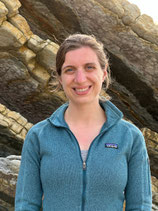
Jennifer Kasbohm, Carnegie Science, Washington, DC, USA
As a geochronologist, Jennifer generates the timelines for geologic events that help us better understand interactions between the solid Earth, surface environments, oceans, and atmosphere in deep time. Her research relies on an integrated stratigraphic approach to combine high-precision U-Pb zircon geochronology, geochemical, and paleomagnetic data. She uses geochronology to assess the role of large igneous provinces in perturbing Earth’s paleoenvironment, to calibrate the Geologic Time Scale, and to track rates of plate tectonics and other Earth system processes.
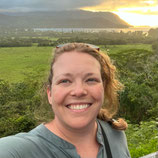
Anna Joy Drury, School of Geography, Geology and the Environment, University of Leicester, UK
Anna Joy is a geochemist, stratigrapher and palaeoceanographer interested in the evolution of Cenozoic climate and improving the Geological Timescale that underpins it. Her research focusses on reconstructing Earth’s climate rhythms and quantifying how they change across different climate states. To achieve this, she brings together the geochemistry of tiny marine fossils and sediments with cyclostratigraphy, astrochronology, and advanced core image processing. Marine archives and their data lie at the heart of her research, so her focus has recently expanded to exploring how to optimise the use of physical and digital legacy archives collected over the lifetime of scientific ocean drilling.
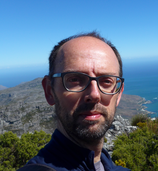
Thomas Westerhold, MARUM – Center for Marine Environmental Sciences, University of Bremen, Germany
Thomas is a marine geoscientists working with scientific ocean and land drilling data. The focus of his research is to reconstruct the stability of past climates and to unearth the causes and consequences of climate disruptions recorded in the geological record. By collaborating with scientists around the world, he aims to gain a better understanding of how the Earth's climate functions under warmer conditions and to explore the planet's safe operating space. As timing is crucial to gaining a fundamental understanding of cause and effect in the Earth's climate system, he specialises in creating highly accurate age models for geochemical data from deep-sea sediments, which uniquely record the last 100 million years of our planet's geological history.